


Pimax Unveils the Crystal Pro VR Headset
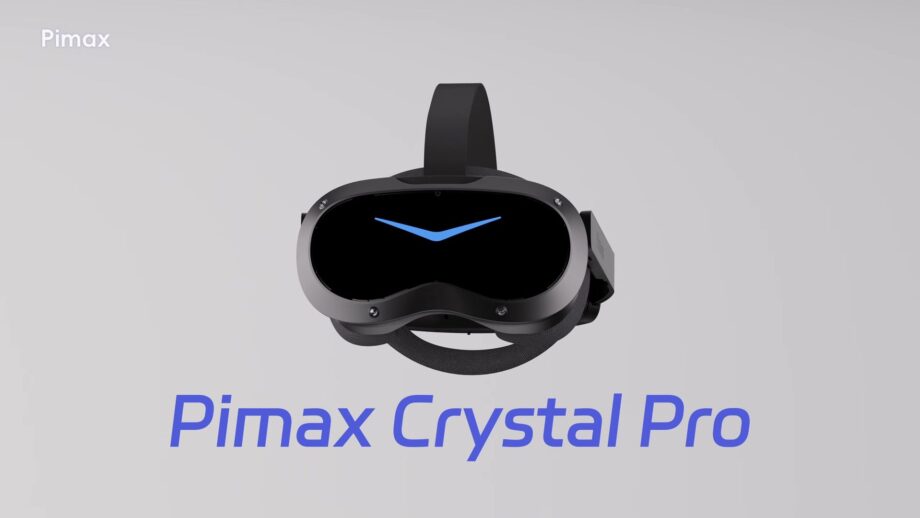
High‑end VR maker Pimax is responding to Valve’s return to the XR market with a new flagship headset, the Crystal Pro. The device borrows design cues from Valve’s Steam Frame, featuring a black‑and‑blue color scheme and a detachable controller system that magnetically snaps together into a full gamepad.
The Crystal Pro runs on a Snapdragon XR2 Gen 2 processor for standalone use, while a DisplayPort connection lets it deliver lossless PCVR performance when tethered. Its biggest innovation is a wireless solution that avoids the heavy image compression typical of other headsets. Instead of compressing each frame, the headset uses a dedicated 60 GHz AirLink dongle that provides a single‑channel link to a PC. Because the 60 GHz band is unused by other devices, the connection can remain uncompressed, though it cannot pass through walls. To overcome this, Pimax sells a $599 AirLink kit that includes two USB‑C antennas for a stronger, direct link.
Software called Pimax Play helps users position the antennas for optimal signal strength, and beam‑steering infrared technology ensures the data travels straight to the headset. The headset also employs “native foveated streaming,” using ten infrared emitters that track the user’s eye at 120 Hz, sharpening the image only where the eye is focused, a concept first introduced with the Steam Frame and later adopted by Virtual Desktop.
Visually, the Crystal Pro features 2880 × 2880 per‑eye QLED panels with a 110° field of view and refresh rates up to 110 Hz (120 Hz). The controllers are split in half, magnetically joining into a traditional gamepad for flat‑screen play, echoing the Steam Frame design.
Pimax also launches the Spation, a compact desktop PC built specifically for VR gaming and compatible with Windows and SteamOS, though its price is still undisclosed. The Crystal Pro itself is priced at $1,399 and ships with the AirLink 60G kit included.
Jaap Grolleman, Pimax’s brand and communications manager, says the company admires both Valve’s ecosystem and the Quest 3’s price‑point, noting the shared strengths of these platforms.