

It may seem silly to ask in our The world of horse testicles post-Red DeadBut how much demanding detail is too much? How much is not enough? Gamedev can go on forever if you don’t prioritize the things that players actually notice, but if you’re making an immersive fantasy RPG, it’s critical that the intended illusions (bustling cities, bustling taverns, festering dungeons, etc.) aren’t shattered.
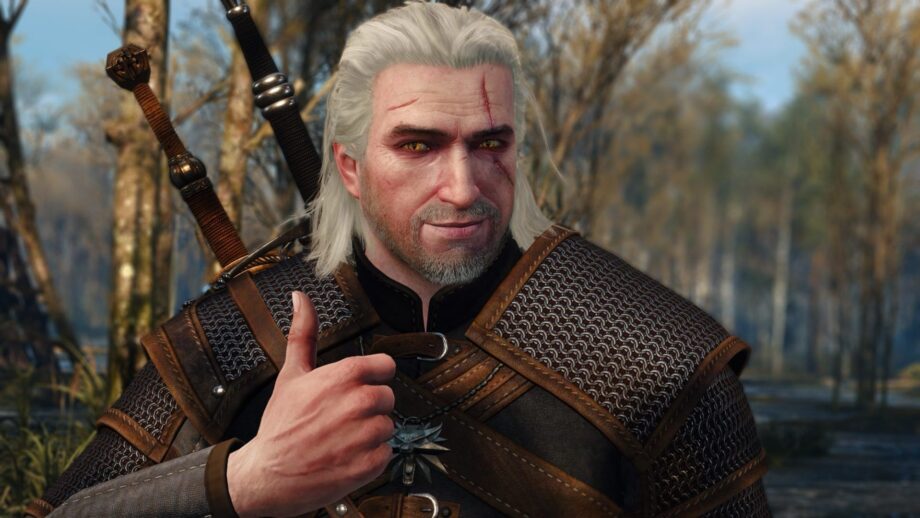
This tightrope walk is something CDPR has gotten better at over the years, but it loomed over the development of The Witcher 3, as CD Projekt Red’s Philipp Weber told Edge Magazine (via GamesRadar). The reason is simple: whenever possible, players love to try to peek behind the curtain.
“If a village only has eight houses, people will want to see if they really exist in the world or if it’s just a lie,” Weber told Edge. “Nowadays, a lot of people are interested in those kinds of details, and that really haunted us.”
“Today, if you said ‘give me a Witcher 3 village that has eight houses,’ I could give it to you in two hours,” he said. But there was a time when “when it came to reacting to the player, there weren’t as many details.”
An example case mentioned in the article is that when the player starts using combat moves in the middle of the city, the NPCs were programmed to drop whatever they were holding and escape. This worked for the most part, except for the fact that mothers who swaddled their babies did the same thing: “For a few weeks, the women just dropped their babies, left and right.”
you may like
A big component of believability is simply giving NPCs things to do and switching between them unpredictably. “We don’t give them specific paths,” Weber said. “We give them places of interest that are available and then they are the ones who find their way… for the 50 sailors in the port of Novigrad, for example, we created 200 possible places, so even if all 50 were active at the same time, they would have options.”
It seems like the human touch helps a lot here. Cyberpunk 2077’s stylish and detailed NPCs are a great case study that shows the value of a craft moment here and there. And while systems-based simulation is a big part of why these digital nobodies are credible in the first place, CD Projekt has said in the past that the quality gap between manually programmed NPCs and their controversial AI counterparts is “like a canyon.”