



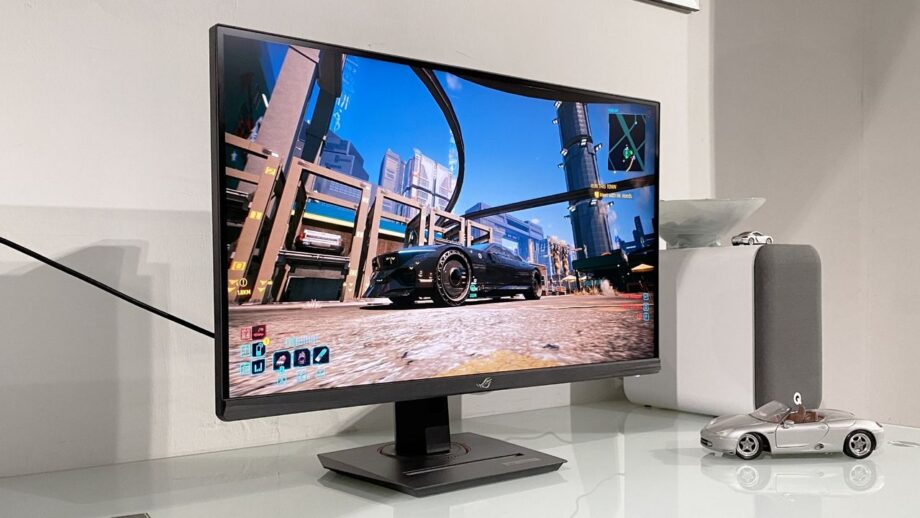
The Rise of Dual‑Mode Gaming Monitors
The memory crisis may be in full swing, taking with it numerous PC components, but the value of gaming monitors has actually improved in recent years. Their price‑to‑quality ratio is now surprisingly strong, with even recent QD‑OLED displays hovering around $300. Because of this, monitors are one of the few hardware categories I review without hesitation, and I’m genuinely excited about them. AOC’s designers have admitted their software still lags, and I’ve been testing the Koorui G2741L, a dual‑mode 4K/1080p monitor, for several weeks.
Dual‑mode technology lets you toggle between a high‑resolution, lower‑refresh setting for immersive single‑player games and a low‑resolution, high‑refresh setting for competitive play. Monitors like the Acer Nitro 4K/1080p can be found for as little as $160, offering a 72 Hz 4K mode and a much faster 1080p mode. While you could manually change resolution, dual mode provides a higher maximum refresh rate than simply lowering the resolution on a native 4K panel.
Despite these benefits, dual‑mode monitors have drawbacks. Switching between 4K and 1080p on the Koorui is slow because it requires pressing physical buttons that navigate the built‑in software, resulting in a noticeable delay. The 1080p image also suffers from extra blur, as the monitor reduces the pixel count by a quarter while boosting the refresh rate, often using interpolation. Some newer models, such as the Alienware AW2725QF, use integer scaling—doubling pixels in both directions—to get closer to a true 1080p look, but the compromise remains.
There is still room for growth. OLED panels have become more stable, with burn‑in issues reduced and LG’s RGB stripe technology eliminating font striping. Better interpolation algorithms and wider adoption of integer scaling could make dual mode smoother and sharper. A single, instant‑switch button would also improve the user experience, and the price advantage of dual‑mode monitors makes them an appealing bonus rather than a premium feature. Ultimately, a value‑oriented dual‑mode OLED monitor with integer scaling and refined software would be the ideal evolution.
