



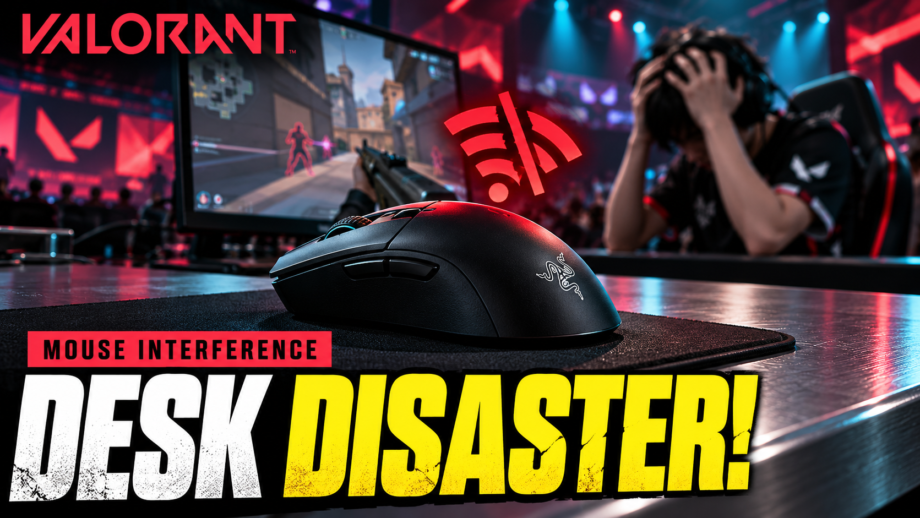
At a major esports tournament, the spotlight should belong to spectacular plays and championship ambitions. At VALORANT Champions Shanghai, however, an unexpected piece of equipment became part of the story: the desks. Metal components in the stage furniture were linked to mouse interference, interrupting matches and raising questions about competitive fairness.
According to Dot Esports, Riot’s global head of VALORANT esports, Leo Faria, said investigators identified specific metal parts in the desk construction as the source of the problems. He initially reported a temporary solution and plans to rebuild the desks entirely. What looked like ordinary stage furniture had become an operational headache.
The controversy sharpened during FUT Esports’ match against 100 Thieves. PC Gamer reported that FUT player xeus experienced a mouse malfunction that prevented him from firing. FUT lost the series 2–0. Riot subsequently acknowledged that a round rollback should have been permitted, but decided the match result would stand.
That distinction matters. Acknowledging an officiating mistake does not establish that the malfunction determined the entire series. Nevertheless, leaving the result unchanged after admitting an error creates an uncomfortable situation: the affected team receives recognition of its complaint, while the competitive outcome remains untouched. That tension deserves careful discussion without assigning blame to either roster.
Riot also asked players to switch to wired mice while the interference problem was addressed, PC Gamer reported. The instruction offered a practical workaround for repeated disruptions, although changing equipment arrangements during a tournament introduces its own adjustment challenges.
For a professional player, the mouse is an extension of a practiced routine. Grip, positioning, and movement become familiar through countless repetitions. Even a seemingly modest change to the setup can demand attention that would otherwise go toward reading opponents, coordinating utility, or preparing for the next engagement. Consistency is part of competitive preparation.
The incident also challenges how tournament readiness should be judged. A stage can look impressive on camera while concealing problems at player level. Organizers need to evaluate the complete workstation under realistic conditions, including the furniture and peripheral placement, rather than assuming that individually reliable components will function perfectly together.
There is a communication lesson here, too. When technical faults interrupt competition, players and viewers need understandable explanations. Officials should clarify what happened, which remedies are available, and how decisions were reached. Clear procedures cannot erase a malfunction, but they can make the response easier to assess and reduce avoidable uncertainty.
For spectators, repeated pauses can overshadow the action they came to watch. For competitors, the stakes are more personal: preparation and performance must translate into dependable inputs. A tournament’s credibility rests partly on ensuring that players can trust the environment around them when a decisive moment arrives.
Shanghai’s desk controversy is a reminder that esports excellence depends on details beyond the game itself. Spectacular production has value, but reliable workstations are fundamental. The strongest lesson for future events is straightforward: test the entire playing environment thoroughly, establish clear recovery procedures, and keep the contest centered on the competitors’ skill.
