



Can we ban brands from using “ecosystem” in sim racing ads?
When a new sim racing wheel ships, manufacturers often promise an ever‑growing “ecosystem” of add‑ons, pedals, shifters and future upgrades. The idea is logical: start with the basics and expand as your budget and habits allow. In practice, however, those promises are rarely kept, leaving buyers with a half‑finished setup.
Nacon’s Revosim RS Pure package – a 9Nm direct‑drive wheelbase, round wheel and load‑cell pedals for €699 – undercuts rivals on price while matching them on build quality. Yet it launched with empty connection points labeled “gear lever” and “handbrake,” a promise of future accessories that didn’t materialise until months later, when the RS Pure Hybrid shifter, load‑cell handbrake and clutch pedal finally arrived. (Image credit: Future/Alex Berry)
Turtle Beach followed a similar path with its VelocityOne range, offering a Multi‑Shift lever and handbrake before disappearing from the market. Thrustmaster, meanwhile, marketed the EVO Racing Hub as the start of a modular system, promising interchangeable wheels and paddles that only recently began to appear on its website. (Image credit: Future/Alex Berry)
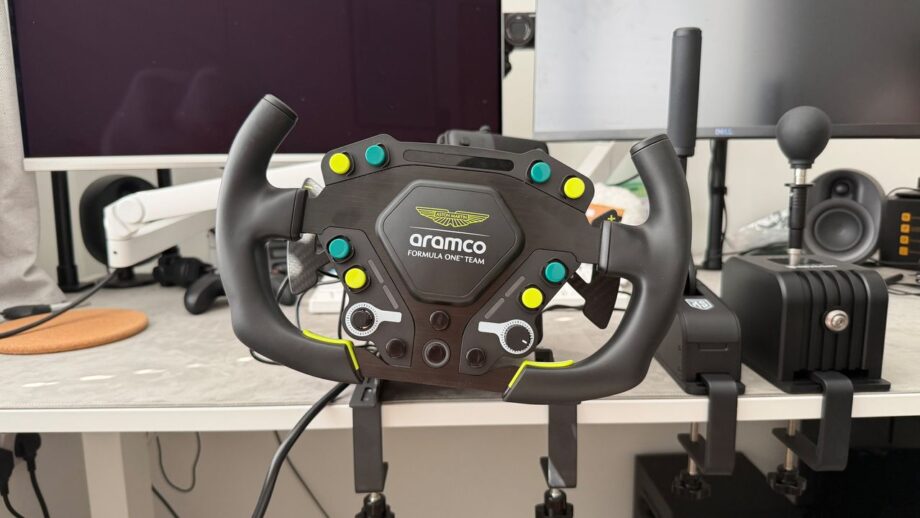
Availability remains uneven. Nacon’s Revosim kit is currently stocked in the UK and Europe through its own site and Argos, but expansion packs take time to reach other retailers. The recent Aston Martin Aramco F1 customization kit adds a formula‑style rim, carbon‑fiber paddles and themed accents, offering a niche but well‑crafted option for serious sim racers. (Image credit: Future/Alex Berry)
Nacon is now extending the ecosystem to consoles with the RS Initiale and RS Lite direct‑drive packages, bringing RevoSim to PlayStation and Xbox for the first time. The challenge will be ensuring cross‑platform compatibility and delivering the promised accessories on schedule. If Nacon can keep its word, the sim racing world may finally have a true ecosystem worth the name.
