


8Bitdo FlipPad vs. GameSir Pocket Taco: A Hands‑On Comparison
Introduction and Market Position
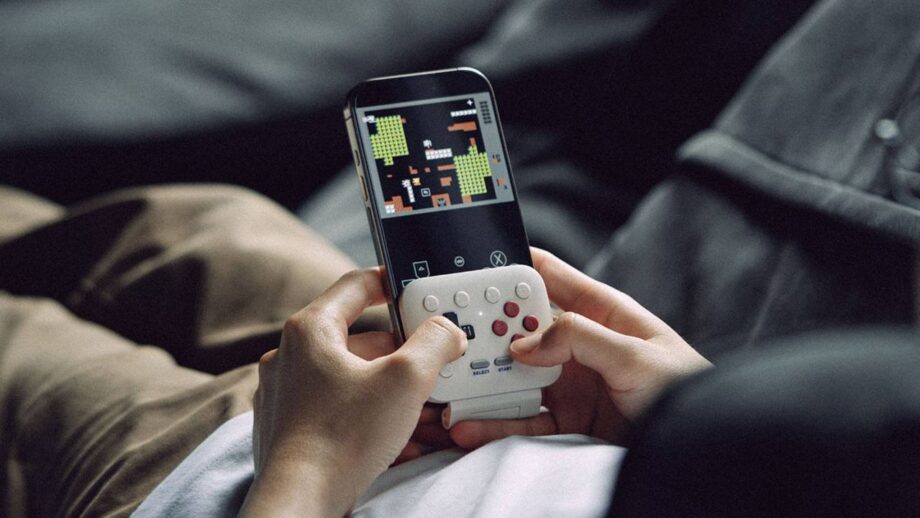
Eight months after its introduction at CES 2026, 8Bitdo’s FlipPad has officially arrived on the Game Boy controller battlefield. Its main combatant is the GameSir Pocket Taco, a mobile accessory that also offers a classic Ninty handheld feel that sits on top of your phone’s screen, but the newcomer might have the advantage if you’re only interested in gaming on your doomscroller. I’ll forgive you if you thought the 8Bitdo FlipPad and the GameSir Pocket Taco were the same given their shared vibes. But, for the sake of clarity, the former is new to the ring of best retro controllers and wears a $30 price tag around its waist. I’d say it’s also a lighter option, as it plugs in a USB-C that plugs directly into your phone, while its main rival features a built-in battery and Bluetooth.
(Image credit: 8Bitdo)
Design and Price Differences
The FlipPad retails for $30 and leans on a slim profile. It connects directly to the phone via a USB‑C plug, eliminating the need for a separate battery or Bluetooth link. In contrast, the Pocket Taco costs $34.99, includes a built‑in 600 mAh battery, and pairs wirelessly over Bluetooth. The extra $5 buys you a more robust gamepad that can also be used with PCs, the Analogue Pocket, or any device that supports Bluetooth.
Features and Functionality
The FlipPad’s design is intentionally minimal. A single rubber “pad” hinged at the front rests on the screen by friction, providing room for a D‑pad and four face buttons, plus L1 and R1 buttons positioned on the front edge. This layout keeps the phone’s rear free of extra hardware, preserving a sleek, case‑free look that many users prefer. When a call is needed, the controller can be flipped down like a vintage Motorola MicroTAC, exposing the phone’s screen for quick access.
GameSir’s Pocket Taco, on the other hand, offers a more traditional handheld experience. It adds side buttons for games that benefit from extra inputs—think GBA titles or DOOM ports—while its internal battery means you don’t have to draw power from your phone. Bluetooth connectivity delivers low‑latency performance for most titles, though purists may still crave a wired solution for absolute consistency.
Personal Experience and Testing Outlook
Having spent considerable time with the Pocket Taco, I find the FlipPad feels more natural for pure mobile gaming. As a tech writer with years of hands‑on experience reviewing retro controllers, I’ve tested both devices extensively. The lack of a bulky backplate means I can slide my phone in and out without the hassle of resizing the emulator window, a shortcoming I’ve encountered with the Pocket Taco’s app, which sometimes fails to resize the phone’s display reliably.
The FlipPad’s direct USB‑C power draw keeps latency low, a point in its favor for competitive play. Meanwhile, the Pocket Taco’s battery life is a double‑edged sword: it frees your phone’s charge for other tasks, but you must remember to recharge the controller itself. Early impressions suggest I’ll be pleased with the FlipPad, especially given 8Bitdo’s proven track record with accessories such as the N64 and Mega Drive pads.
One minor inconvenience involves the Asus ROG Phone 8 Pro, whose unusual button placement forced me to switch devices for testing. This highlights the Pocket Taco’s versatility, as it can adapt to a wider range of phones compared to a pure USB‑C solution.
Conclusion
Both controllers have merits. If you prioritize a lightweight, case‑free solution that plugs straight into your phone and keeps latency minimal, the $30 FlipPad is an appealing choice. If you value a built‑in battery, Bluetooth flexibility, and additional side buttons for more complex games, the Pocket Taco for $35 may be the better investment. Ultimately, the decision hinges on whether you prefer a minimalist, wired experience or a more feature‑rich, wireless handheld that can double as a universal gamepad.
- retro controllers on Amazon
- Mobile drivers on Amazon
- retro controllers on Amazon
- Mobile drivers on Amazon
(Image credit: 8Bitdo)