


Four Roads Through One Conflict
Fire Emblem: Fortune’s Weave spans 121 hours and feels massive, yet rarely frustrating. The campaign splits into four distinct Part One routes, each driven by a different lead, and Part Two repeats the split pattern.
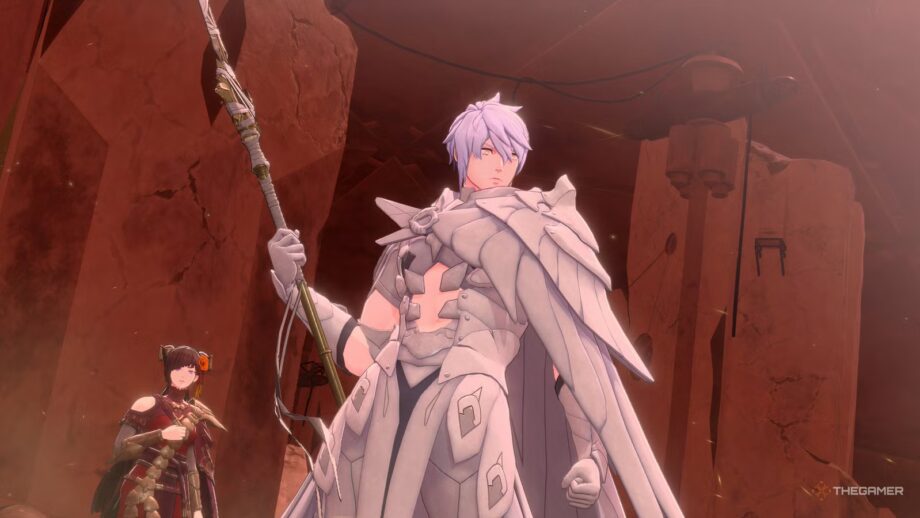
Each route follows a separate Flame Lord—Eshmel, Leda, Theodora, and Cai—so the same year unfolds four unique stories rather than four camera angles of one conflict. Their motives differ: Leda seeks revenge, Theodora defends her kingdom and goddess, while Cai balances mounts and skills, creating varied narratives.
The mechanical separation feels rigid; each army gains exclusive abilities that vanish when routes switch, making early gameplay feel artificially limited. Players lose tools like mount care or battalion recruitment mid‑campaign, prompting irritation despite the game’s overall ambition.
Fire Emblem, But Make It Unhinged
The tactical combat remains solid, but the game embraces wild scenarios that push the series beyond safe territory. An Arena mode grants infinite revives while players race to defeat massive monsters, and a side quest pits thieves against the hero in a race for stolen loot.
Difficulty stays fair; the hint system points out recruits, and late‑game maps demand clever positioning rather than obscure prerequisites. Though some battles become harsh and reinforcements grow tedious, clearing them delivers the classic Fire Emblem fist‑pump satisfaction.
Unlimited time‑rewind removes frustration but fuels perfectionism; players rewind for minor misses, turning every turn into a chance to optimize rather than react.
I Love It When A Game Comes Together
Part Three converges the fragmented routes, letting players merge character versions and fold earlier choices into a single definitive cast. This convergence rewards the massive time investment with a satisfying sense of curation.
Eshmel, the central figure, remains underdeveloped, functioning more as a plot device than a character, which is a disappointment given his narrative weight.
The four Flame Lords, however, shine with distinct motivations and strong supporting casts, delivering memorable storylines that feel fresh despite the repetitive setting.
Support chains are sparse; many characters receive few or no support conversations, keeping dialogue purposeful rather than filler.
The story’s grand scope demands players experience all routes, remember details, and stay engaged for over 100 hours, but each revelation justifies the commitment.
With its sprawling campaign, deep tactical options, and rich cast, Fortune’s Weave exceeds expectations, making its excess feel purposeful rather than careless.
After 121 hours, the experience feels justified, delivering the absurdly comprehensive Fire Emblem game its premise promised.