

Big Walk Interview: A Walk Through Development
After more than ten years of remote work in a niche industry, I found Zoom interviews exhausting, with cramped video windows and poor audio that left conversations feeling disconnected.
I wanted a more tangible, emotional way to speak with developers, especially when chatting with artists whose work I love, so I invited the team behind Big Walk to be interviewed while actually walking in the game.
Stuart Gillespie‑Cook, Jake Strasser, and Nico Disseldorp joined me on a 90‑minute stroll through the island, accompanied by their in‑game characters. They explained that their official titles are simply “developer,” but each handles distinct responsibilities: Stuart focuses on game design, animation and recent QA; Jake oversees world building and technical art; Nico programs and designs challenges.
The prototype they built in a week was a bare‑bones model of a jumping character in an empty terrain with proximity voice chat, allowing players to stay together and hear each other only when close. Early builds included a photo‑scan of a remote island and a simple light orb that could be toggled on and off.
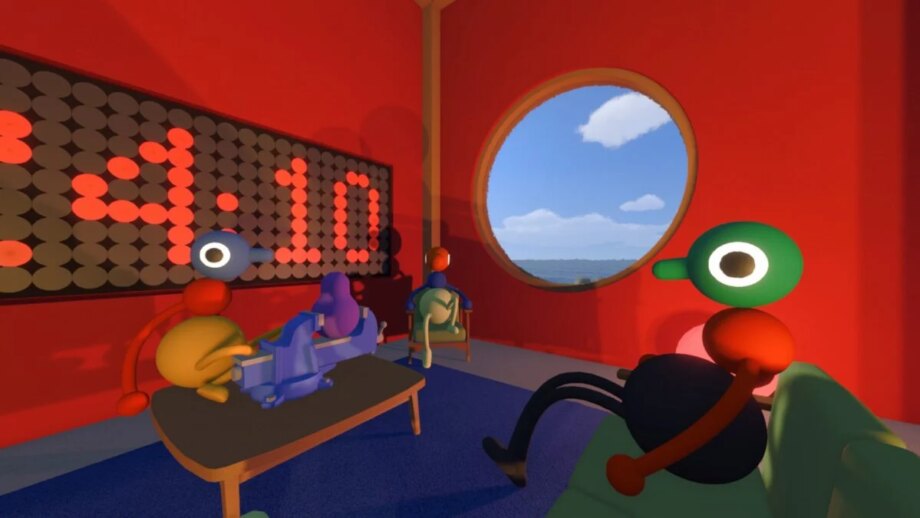
During the walk we rode a train, explored a beach house with a five‑minute timer, and solved puzzles that required cooperation—such as sitting in a room and waiting out the countdown, or turning a red toy‑like object in a blue clamp to trigger confetti and a clown horn.
The developers described how they iterated on challenges, turning un-fun gauntlets into meaningful cooperative moments that emphasized eye contact, gestures, and shared presence rather than pure competition.
Audio design proved crucial. Nicholas Zhang and Em Halberstadt from Shell in the Pit crafted echoing voices, megaphone effects, and the distinctive “log out” pbbbbt sound that plays loudly when a character puts an item away, breaking the usual diegetic rules.
They also integrated a music system that changes with the in‑game day‑night cycle, letting tracks like “Breathwork” cue sunset moments, and used walkie‑talkies and flares as playful items that add humor and tension.
Accessibility was a priority; the game offers a skip feature, visual cues for hearing‑impaired players, and text chat that mimics audio cues, allowing diverse ways to engage with puzzles.
When asked about reception, the team said they expected a risky, high‑risk game that might divide players, but they were surprised by the strong affection it has garnered and the growing community of fans who appreciate its quirky, personal design.
Favorite moments included watching strangers swim out to sea after completing the final challenges, hearing spontaneous laughter echo across the beach, and realizing that the game’s ending needed a ritualized goodbye that felt earned.
The interview concluded with a light‑hearted pbbbbt as I left, underscoring the playful spirit that runs through Big Walk.