

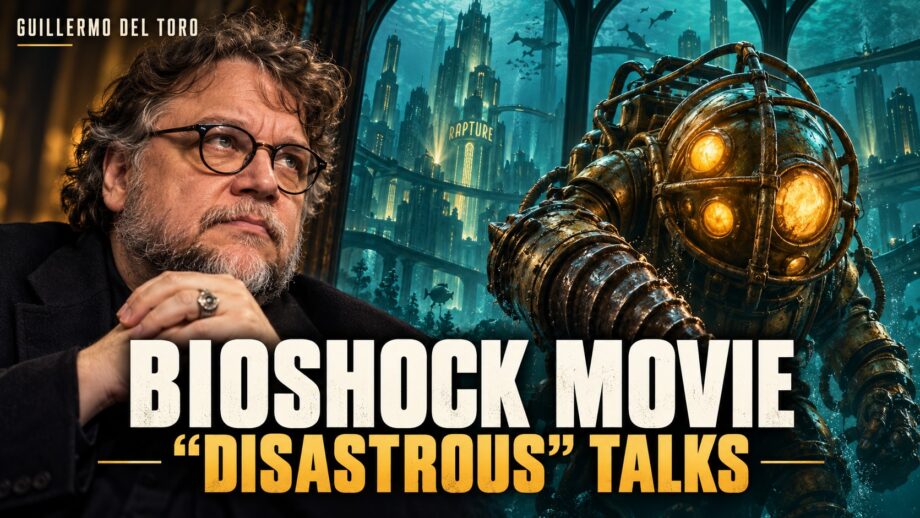
Guillermo del Toro has shed light on a tantalizing Hollywood project that never materialized: his attempt to bring BioShock to the screen. The filmmaker revealed that early conversations about adapting the celebrated game went badly, leaving him with little enthusiasm for pursuing another video game adaptation. His comments concern development discussions, rather than a judgment on a completed BioShock film.
Speaking during IGN’s Icons interview series, del Toro acknowledged that he had explored the possibility of adapting BioShock. Recalling those conversations, he described them as “probably one of the most disastrous calls I’ve ever had.” He did not identify the participants, explain the specific disagreements, or establish exactly when the discussions happened. Those missing details leave the circumstances surrounding his involvement unresolved.
The pairing certainly invites imagination. BioShock’s underwater city of Rapture combines decaying grandeur, disturbing science, and the wreckage of an ambitious social experiment. Its imposing Big Daddies and unsettling Little Sisters offer the kind of striking imagery that could anchor a memorable screen adaptation. For anyone imagining del Toro’s interpretation, the attraction extends beyond monsters to the human tragedy surrounding them.
Yet visual compatibility does not guarantee an easy translation. Del Toro’s explanation focused on the differences between games and movies. Although both mediums can use cinematic imagery, he argued that their storytelling operates differently. Players solve problems, explore environments, and assemble information through participation. A film must guide its audience through those discoveries using another set of tools.
That distinction is particularly relevant to BioShock. Rapture is more than a backdrop for action: exploring it helps players understand how its promises collapsed. Environmental details and discoveries build an understanding of the city alongside the central narrative. A movie could reproduce its flooded corridors beautifully while still struggling to recreate the personal involvement that makes those spaces meaningful.
A successful adaptation would therefore need to make deliberate choices about perspective. Whose experience should lead viewers through Rapture? How much of its history belongs in dialogue, and how much can emerge through design and behavior? These are creative questions raised by the material, rather than confirmed explanations for why del Toro’s conversations deteriorated.
His account also belongs to a different story from Netflix’s announced adaptation. In August 2022, Netflix named Francis Lawrence as director and Michael Green as screenwriter, working with 2K and Take-Two Interactive. That announcement established a separate creative team; del Toro’s recollection should not be treated as a review of their work or evidence about its quality.
For fans, the revelation adds another intriguing possibility to BioShock’s screen history. Del Toro’s involvement might have produced an extraordinary interpretation, but his remarks offer no basis for reconstructing a lost screenplay or assigning blame for the failed talks.
What remains compelling is the challenge itself. Rapture has the atmosphere and ideas to sustain a powerful film. Bringing it to life will require filmmakers to understand why players remember the experience, then find an equally persuasive way to make audiences feel its horror.